
Loading...
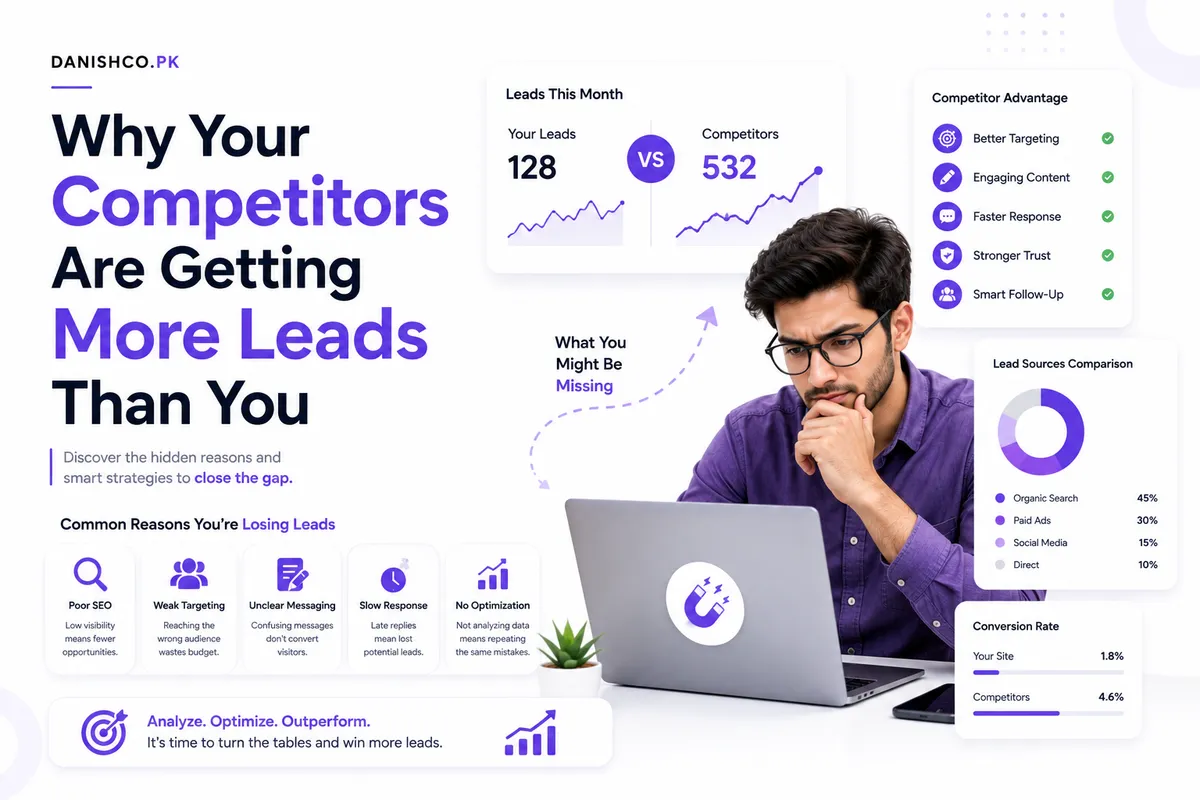
Your competitors may not have a better product—they simply have a better marketing strategy. Learn how to close the gap.
Understanding the core problem that needed to be solved
It is a frustrating experience that many business owners know well: you have a good product, a professional website, and a reasonable marketing budget, yet your competitors seem to be generating leads at a much higher rate. They appear everywhere your potential customers look. They rank higher in search results.
Their content gets more engagement. Their ads seem to convert better. The natural conclusion is that they must have a better product or a larger budget, but in most cases, neither assumption is correct.
The difference is almost always in marketing strategy and execution. The first advantage competitors often have is sustained investment in content marketing and SEO. Content marketing is a long-term strategy that compounds over time.
Each blog post, guide, video, or infographic that a competitor publishes continues to generate traffic, leads, and brand awareness months and years after publication. Businesses that started content marketing early have accumulated hundreds of pieces of content that collectively drive thousands of monthly visitors. Businesses that have not invested in content marketing are invisible for the vast majority of search queries in their industry.
This content moat is difficult to overcome quickly because it takes months for new content to rank and gain traction. The second advantage is better lead magnets. A lead magnet is a valuable piece of content offered in exchange for contact information.
Competitors who offer compelling lead magnets that address specific customer pain points capture high-quality leads at a much higher rate than those offering generic content. A well-designed lead magnet speaks directly to a specific problem, offers immediate value, and creates a positive impression of the brand. Many businesses offer weak lead magnets that are too generic, too brief, or too sales-focused, resulting in low conversion rates and low-quality leads.
The third advantage is superior landing page optimization. Even when both you and your competitor drive traffic to your websites, the competitor may convert a much higher percentage of that traffic. Landing page optimization involves designing pages specifically for conversion, with clear value propositions, compelling headlines, strong calls to action, social proof elements, and minimal distractions.
Pro Tip
Many businesses send traffic to generic website pages that try to serve multiple purposes, resulting in lower conversion rates than dedicated, optimized landing pages. The fourth advantage is more effective email nurturing. Generating a lead is only the first step.
The real value comes from converting that lead into a customer through effective follow-up. Competitors who have well-designed email sequences that educate prospects, build trust, and guide them toward a purchase decision capture significantly more value from their leads. Many businesses capture leads but fail to follow up systematically, allowing leads to go cold and eventually buy from competitors who maintained consistent communication.
The fifth advantage is better social media engagement. Competitors who actively engage with their audience on social media build relationships that lead directly to leads and referrals. Social media engagement goes beyond posting content regularly.
It involves responding to comments, participating in conversations, sharing user-generated content, and building a community around the brand. Businesses that treat social media as a broadcast channel rather than an engagement platform miss the opportunity to build the relationships that drive word-of-mouth referrals. The sixth advantage is stronger brand positioning.
Competitors who have clearly defined their brand positioning communicate a distinct and compelling reason to choose them over alternatives. Strong brand positioning makes every marketing effort more effective because the message is clear, consistent, and differentiated. Businesses with weak or unclear positioning blend in with competitors, making it difficult for prospects to understand why they should choose one over another.
The seventh advantage is more targeted advertising. Competitors who use precise audience targeting in their advertising campaigns achieve lower costs and higher conversion rates than those who use broad targeting. They use data from their existing customers to build lookalike audiences, retarget website visitors with relevant offers, and exclude audiences that are unlikely to convert.
Pro Tip
Businesses that use broad targeting waste significant budget showing ads to people who will never become customers. The eighth advantage is better customer experience at every touchpoint. Competitors who invest in customer experience create positive impressions that generate repeat business and referrals.
From the first website visit through the sales process to ongoing support, every interaction shapes the customer's perception of the brand. Businesses that neglect the customer experience lose opportunities for referrals and repeat business, forcing them to spend more on acquiring new customers to replace those they fail to retain. A ninth advantage that aggressive competitors leverage is superior use of marketing automation and technology stacks.
They have integrated their CRM, email marketing platform, analytics tools, and advertising platforms into a seamless system that automates lead capture, scoring, nurturing, and handoff to sales. This automation allows them to respond to leads faster, personalize communications at scale, and track prospect behavior across channels in ways that businesses using disconnected tools cannot match. The speed advantage alone is significant: research shows that contacting a lead within five minutes of their inquiry increases conversion rates by up to nine times compared to waiting even thirty minutes.
A tenth advantage is better use of social proof and case studies. Competitors who systematically collect and prominently display customer success stories, video testimonials, detailed case studies with measurable results, and third-party reviews build trust and credibility far more effectively than businesses that rely on generic claims about quality or service. This social proof addresses the fundamental uncertainty that every potential customer feels before making a purchase decision, and competitors who provide compelling evidence of their value win more business as a result.
An eleventh advantage that forward-thinking competitors have is their systematic approach to customer feedback and continuous improvement. They actively collect feedback from customers at multiple points in the journey through surveys, reviews, support interactions, and direct outreach. They analyze this feedback to identify patterns, address recurring issues, and continuously refine their marketing messages, product offerings, and customer experience.
Best Practice
This feedback loop creates a cycle of continuous improvement that helps them stay ahead of competitors who rely on assumptions rather than data about what their customers actually want and value. A twelfth advantage is better use of urgency and scarcity in their marketing. Competitors who effectively use limited-time offers, limited-quantity notifications, countdown timers, and exclusive access campaigns create psychological pressure that drives faster purchase decisions.
These tactics leverage the natural human tendency to place higher value on things that are scarce or time-limited. When used ethically and authentically, urgency and scarcity can significantly improve conversion rates and reduce the sales cycle length, giving these competitors a measurable advantage in lead conversion speed.
The strategic approach we developed and implemented
Closing the gap with competitors who appear to be generating more leads requires a systematic competitive audit followed by strategic improvements in the areas where you are falling behind. The goal is not to copy what competitors are doing but to understand the underlying principles that make their marketing effective and apply those principles in a way that leverages your unique strengths. The first step is conducting a competitive audit framework.
Identify your top three to five competitors who are consistently outperforming you in lead generation. Analyze their websites, content, social media presence, advertising, and email marketing. Document specific observations about what they are doing in each area.
Use tools like SEMrush or Ahrefs to analyze their SEO strategy, top-performing content, and backlink profile. Use social media analytics tools to understand their engagement patterns and content strategy. Subscribe to their email lists to analyze their nurturing sequences.
The goal is to build a comprehensive picture of their marketing strategy and identify specific gaps between their approach and yours. The second step is performing a content gap analysis. Compare your content library with your competitors to identify topics they are covering that you are not.
Focus especially on content that is driving traffic and engagement for them. Use keyword research tools to identify search queries in your industry where competitors rank but you do not. Prioritize content topics based on search volume, relevance to your target audience, and your ability to create content that is better than what competitors offer.
Create a content calendar that systematically fills these gaps over the next three to six months. Each piece of content should target specific keywords, address specific customer questions, and include a compelling call to action that drives lead generation. The third step is improving your lead magnet strategy.
Audit your current lead magnets against best practices. A strong lead magnet addresses a specific, urgent problem faced by your target audience. It delivers immediate value that can be consumed quickly.
Key Takeaway
It demonstrates your expertise and builds trust. It naturally leads toward your core product or service. If your current lead magnets are weak, create new ones that meet these criteria.
Consider offering templates, checklists, worksheets, guides, toolkits, or assessment tools that provide practical value. Test different lead magnets with small audience segments to identify which ones generate the highest conversion rates before rolling them out broadly. The fourth step is implementing a landing page optimization checklist.
Every lead generation campaign should direct traffic to a dedicated landing page designed for a single purpose: converting visitors into leads. Each landing page should have a single, clear headline that communicates the specific benefit of the offer. It should include supporting copy that reinforces the value and addresses potential objections.
Social proof elements like testimonials, case studies, and trust badges should be prominently displayed. The call to action should be visually prominent, action-oriented, and repeated at multiple points on the page. Remove all navigation links and distractions that might lead visitors away from the conversion goal.
A/B test different headlines, images, offers, and layouts to continuously improve conversion rates. The fifth step is developing automated email sequences for lead nurturing. Create a series of three to five emails that automatically follow up with new leads.
The first email should deliver the promised lead magnet and establish the relationship. The second email should provide additional value related to the lead magnet topic. The third email should introduce your product or service as a solution to the problem addressed in the lead magnet.
Subsequent emails should share case studies, testimonials, and other social proof that builds confidence. Each email should include a clear call to action that moves the prospect closer to a purchase decision. Monitor open rates, click-through rates, and conversion rates for each email and continuously refine the sequence based on performance data.
Best Practice
Set up lead scoring rules that prioritize high-intent prospects and alert your sales team for immediate follow-up. The sixth step is improving social media engagement tactics. Move beyond posting content to actively engaging with your audience.
Respond to every comment and message promptly. Ask questions that encourage conversation. Share user-generated content that showcases your customers.
Participate in relevant industry conversations and groups. Collaborate with complementary businesses and influencers to expand your reach. Allocate specific time each day for active social media engagement rather than treating it as an afterthought.
Track engagement metrics and adjust your approach based on what generates the most meaningful interactions. The seventh step is conducting a brand positioning workshop with your team. Define what makes your business unique and why customers should choose you over competitors.
Identify your target audience with precision and understand their deepest needs and desires. Articulate your value proposition in clear, compelling language that speaks directly to your ideal customer. Develop key messages that communicate your positioning consistently across all marketing channels.
Ensure that every piece of marketing content reflects and reinforces this positioning. Strong brand positioning makes every marketing dollar work harder because your message resonates more deeply with the right audience. The eighth step is integrating your marketing technology stack.
Connect your CRM, email marketing platform, analytics tools, and advertising platforms into a unified system that automates lead management and provides a complete view of each prospect's journey. Implement lead scoring that automatically identifies and prioritizes high-quality leads. Set up automated lead routing that ensures every lead is assigned to the right sales team member immediately.
This integration ensures that your marketing efforts translate into sales follow-up without delay and that you can measure the full impact of your marketing on revenue generation. A ninth step is implementing a systematic customer feedback collection and improvement process. Set up automated feedback collection at key points in the customer journey: after purchase, after onboarding, after support interactions, and at regular intervals during the customer lifecycle.
Key Takeaway
Use surveys, net promoter score measurements, and direct outreach to gather both quantitative and qualitative feedback. Analyze feedback data to identify patterns and prioritize improvements. Close the feedback loop by communicating changes back to customers, demonstrating that their input drives real improvements.
This continuous improvement cycle compounds over time, creating progressively better customer experiences that generate more referrals and repeat business. The tenth step is incorporating ethical urgency and scarcity into your marketing. Create time-limited offers that are genuine and transparent rather than artificially manufactured.
Use stock-level indicators on product pages when inventory is genuinely limited. Implement countdown timers for legitimate promotions and deadlines. Build exclusive access programs for loyal customers that create genuine value rather than false exclusivity.
Train your sales team to use urgency ethically, focusing on genuine time-sensitive opportunities rather than pressure tactics. When urgency and scarcity are used authentically, they accelerate decision-making without damaging customer trust or brand reputation.
Pro Tip
Measurable outcomes and business impact achieved
Conducted competitive audit revealing specific gaps in marketing strategy
Developed content gap analysis and 6-month content calendar
Created high-converting lead magnets optimized for target audience
Built automated email nurturing sequences for lead conversion
Best Practice
Tools, platforms, and technologies powering the solution
Expert Recommendation
The most important lessons from this project
Key Takeaway
Common questions about our approach and methodology
The timeline depends on the scope of work. Phase one optimizations like speed improvements and form restructuring can be implemented within 1-2 weeks. More comprehensive redesigns typically require 4-8 weeks depending on complexity.
Not necessarily. Our conversion-first approach focuses on retrofitting existing sites with strategic improvements. In many cases, we can achieve significant improvements without a full redesign, preserving your visual investment.
We tie every optimization to specific, measurable business metrics. Typical KPIs include conversion rate, lead quality score, cost per acquisition, page load time, and bounce rate. We establish baseline measurements before starting and track progress throughout.
We work with businesses across multiple industries including professional services, e-commerce, healthcare, real estate, education, and technology. Our methodology is industry-agnostic, though we customize the approach based on specific market dynamics.
Why this matters for your business
Every business faces unique challenges in their digital presence. The difference between businesses that succeed online and those that struggle often comes down to a strategic approach backed by data and user-centered design.
Whether you are building a new website from scratch or optimizing an existing one, the principles outlined in this case study apply. Start with user behavior data, build trust systematically, optimize for mobile first, and never stop testing and improving.
Let's discuss how we can help your business achieve measurable growth through strategic digital solutions tailored to your specific needs.
Get Your Free Consultation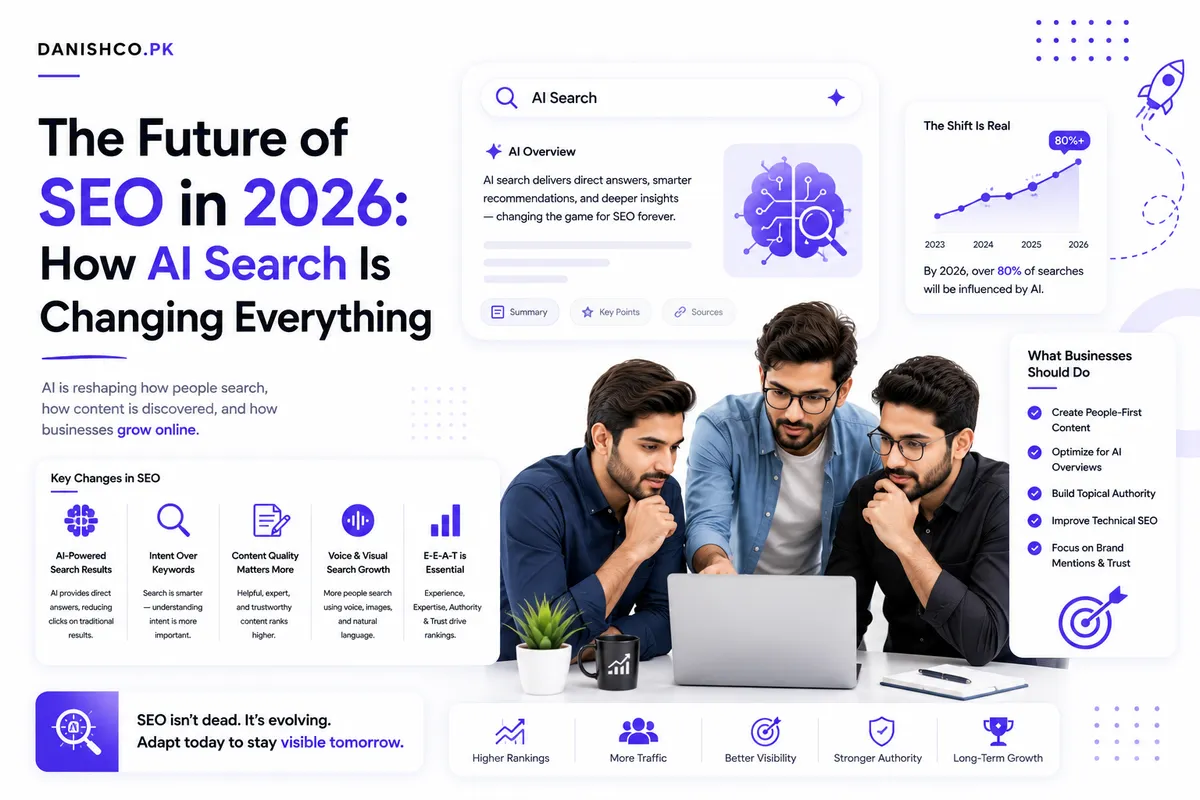 Marketing
Search is evolving faster than ever. Discover how AI Search, Google AI Overviews, ChatGPT and conversational search are transforming SEO in 2026—and what businesses must do to stay visible.
 Marketing
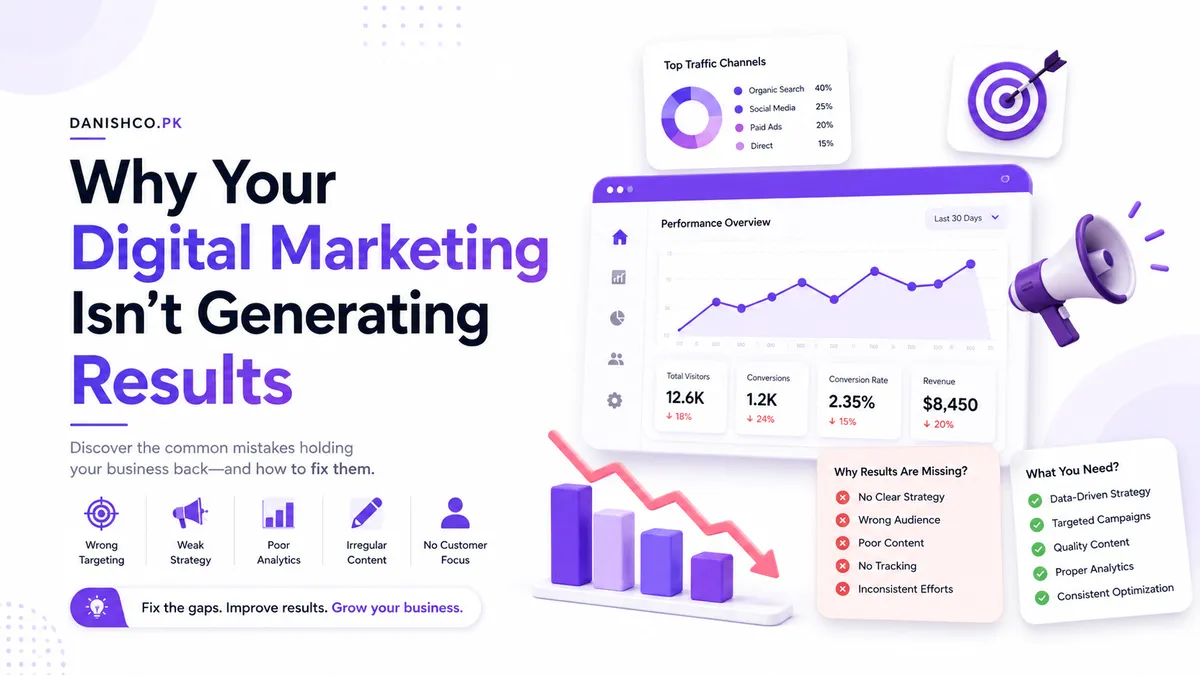
Spending money on marketing but getting little or no return? Discover the biggest reasons campaigns fail and how to fix them.