
Loading...
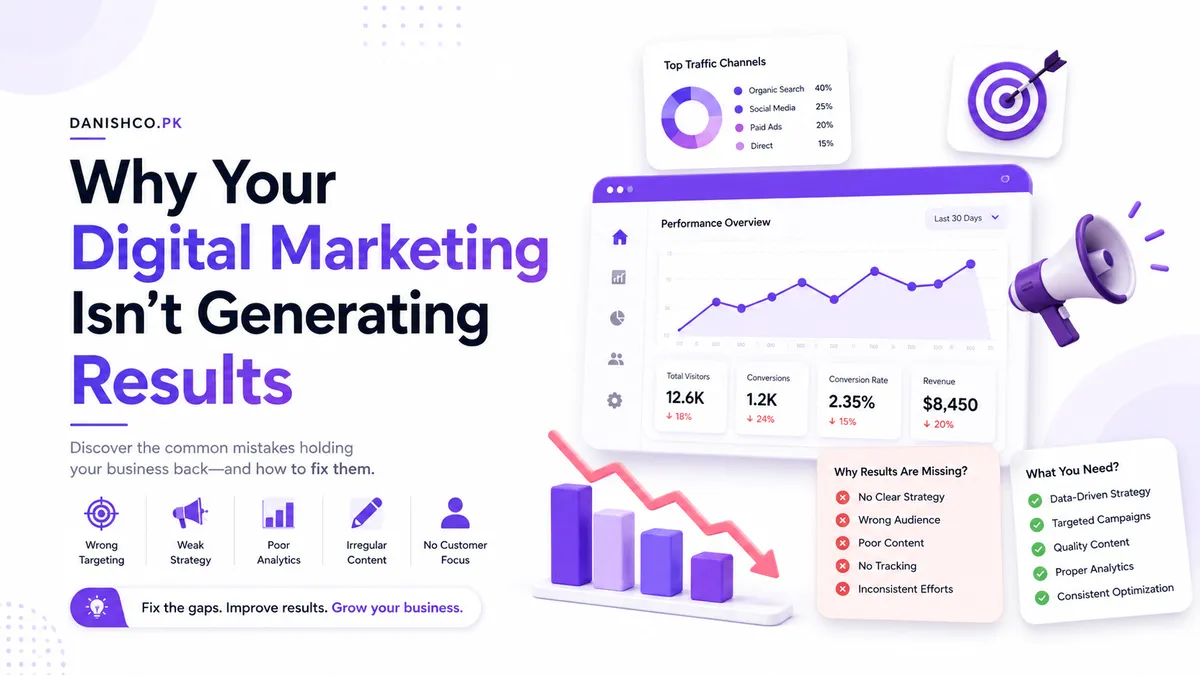
Spending money on marketing but getting little or no return? Discover the biggest reasons campaigns fail and how to fix them.
Understanding the core problem that needed to be solved
Many business owners find themselves in a frustrating position: they are spending significant money on digital marketing each month, yet the results are either nonexistent or impossible to measure clearly. The money goes out, but the leads and sales do not come in. This situation is more common than most business owners realize, and it is rarely because digital marketing does not work.
It is almost always because the digital marketing being done is not built on a foundation that can produce results. The reasons for this failure fall into several recurring categories that we see across industries, budgets, and business sizes. The first and most fundamental reason is the absence of a clear strategy.
Many businesses begin marketing by choosing tactics before defining strategy. They decide to run Facebook ads, post on Instagram, or start a blog without first answering the foundational questions: who exactly are we trying to reach, what specific action do we want them to take, and what message will resonate with them most powerfully. Without a strategy, marketing becomes activity without direction.
Money is spent on channels that may never reach the right audience, content is created without a clear purpose, and performance cannot be evaluated because there were no defined goals to measure against. The second reason is targeting the wrong audience. Even with good creative and compelling offers, marketing fails if it is shown to people who have no need or desire for the product or service being sold.
Many businesses define their target audience too broadly, believing that casting a wider net will catch more fish. In reality, broad targeting leads to wasted spend on people who will never convert, low engagement rates that hurt algorithm performance, and diluted messaging that tries to appeal to everyone but resonates with no one. Proper audience definition requires going beyond basic demographics to understand psychographics, behaviors, pain points, and purchase intent signals.
Key Takeaway
The third reason is poor tracking and analytics. Many business owners cannot tell which of their marketing efforts are working because they have not set up proper tracking systems. They rely on anecdotal evidence, gut feelings, or last-click attribution models that give credit to the final touchpoint while ignoring all the marketing activities that built awareness and consideration along the way.
Without proper analytics, businesses cannot calculate return on investment, identify which channels are most effective, or optimize campaigns based on data rather than assumptions. This lack of visibility leads to continued investment in underperforming tactics and missed opportunities to scale what is working. The fourth reason is inconsistent messaging across channels and over time.
When potential customers encounter a business on multiple platforms, they expect a consistent brand experience. Inconsistent messaging creates confusion and erodes trust. A customer who sees a professional, polished brand on LinkedIn and then encounters sloppy, casual content on Instagram may question the legitimacy of the business.
Similarly, a brand that promises premium quality in one campaign and then emphasizes discount pricing in the next sends conflicting signals about its value proposition. Consistency builds recognition, trust, and credibility. Inconsistency undermines all three.
The fifth reason is a weak or unclear value proposition. The value proposition is the single most important element of any marketing communication, yet it is often the most neglected. Many businesses describe what they do rather than what their customers will achieve by working with them.
They list features instead of benefits. They use jargon and buzzwords instead of clear, compelling language that speaks directly to customer desires and pain points. A weak value proposition means that even when businesses reach the right audience with the right message, that audience has no compelling reason to take action.
The sixth reason is ignoring the customer journey. Many businesses treat all marketing as if it serves the same purpose: getting someone to buy immediately. In reality, customers move through stages of awareness, consideration, and decision, and different types of content and communication are needed at each stage.
Best Practice
Marketing that only focuses on the bottom of the funnel misses the opportunity to build awareness and trust with people who are not yet ready to buy. Marketing that only focuses on the top of the funnel generates lots of attention but few conversions. Effective marketing requires a balanced approach that guides prospects through each stage of the journey with appropriate content and calls to action.
The seventh reason is spreading the budget too thin across too many channels. When businesses try to be everywhere at once, they end up being effective nowhere. Each channel requires minimum investment to reach meaningful audiences, produce sufficient content, gather enough data, and optimize performance.
Businesses that spread small budgets across five or six channels dilute their impact on every platform. When they cannot achieve minimum effective spend on any single channel, nothing performs well, and the conclusion is drawn that digital marketing does not work. The eighth reason is the absence of testing and optimization.
Digital marketing is not a set-it-and-forget-it activity. Successful campaigns require continuous testing of audiences, messaging, creative formats, landing pages, and offers. Businesses that launch campaigns and never revisit them leave significant performance gains on the table.
Without A/B testing, there is no way to know whether a different headline, image, call to action, or audience targeting approach would produce better results. Optimization is the engine of marketing performance improvement, and businesses that neglect it never achieve their full potential return on investment. A ninth and often overlooked reason is the lack of integration between marketing tools and customer relationship management systems.
When marketing platforms do not feed data directly into a CRM, businesses lose the ability to track leads from initial contact through to sale, making it impossible to calculate true marketing ROI. Without this integration, marketing appears disconnected from revenue, and decisions are made based on incomplete data. A tenth reason is failing to align marketing with sales goals and processes.
Best Practice
When marketing and sales operate in silos with different objectives and metrics, marketing generates leads that sales cannot close, or sales blames marketing for poor lead quality when the real issue is misaligned expectations and criteria. The eleventh reason is ignoring seasonality and market trends. Businesses that run the same campaigns year-round without adjusting for seasonal demand changes, industry events, or shifting consumer behavior patterns waste significant budget on poorly timed marketing.
Seasonal adjustments to messaging, budget allocation, and channel mix can dramatically improve campaign performance, yet many businesses treat every month the same. The twelfth reason is neglecting content quality in favor of content quantity. In the rush to maintain a consistent posting schedule, many businesses publish mediocre content that does not engage or convert.
Poor quality content damages brand perception and wastes the attention of potential customers. One excellent piece of content that addresses a specific customer problem with depth and insight will generate more leads than dozens of shallow blog posts or social media updates. Together, these twelve reasons explain why most businesses fail to generate meaningful results from digital marketing.
The good news is that every one of these failures is fixable with the right approach.
The strategic approach we developed and implemented
Fixing underperforming digital marketing requires moving from a tactic-first approach to a strategy-first methodology. The solution is not to spend more money but to spend money more intelligently, with clear objectives, defined audiences, and measurable outcomes guiding every decision. The first step is building a strategy-first marketing approach.
This begins with defining the specific business outcomes that marketing is expected to deliver. Are you looking for direct sales, qualified leads, brand awareness, customer retention, or some combination of these? Each objective requires different strategies, channels, metrics, and budgets.
Once objectives are clear, the next strategic element is identifying the target audience with precision. This goes beyond demographic categories to include behavioral segments, pain points, aspirations, and media consumption habits. The result of this strategic phase is a marketing plan that specifies objectives, target audiences, key messages, channel selection, budget allocation, and success metrics before any tactics are executed.
The second step is audience research and segmentation. Proper audience definition requires primary and secondary research. Talk to existing customers to understand why they bought, what concerns they had, and what nearly stopped them from purchasing.
Analyze customer data to identify patterns in demographics, behavior, and lifetime value. Use social listening tools to understand conversations happening in your market. Create detailed buyer personas that include demographic information, psychographic profiles, goals and challenges, information sources, and objections to overcome.
Use these personas to segment your audience and tailor messaging to each segment. The third step is setting up proper analytics and conversion tracking. Before spending any money on marketing, ensure that you can measure the results of every dollar spent.
Install analytics tools that track not just website traffic but specific conversions that matter to your business. Set up conversion tracking for form submissions, phone calls, online purchases, chat interactions, and any other action that represents a meaningful step toward a business goal. Configure multi-channel attribution to understand how different marketing touchpoints work together to drive conversions.
Key Takeaway
Create dashboards that give you real-time visibility into performance across all channels so you can make data-driven decisions about budget allocation and optimization priorities. The fourth step is implementing a messaging consistency framework. Develop brand messaging guidelines that define your brand voice, tone, key messages, value proposition, and brand personality.
These guidelines should be specific enough that anyone creating content for your brand can produce on-message communications without deviation. Apply these guidelines across all marketing channels and materials. Conduct regular audits to ensure consistency is being maintained.
Consistent messaging builds recognition, reinforces your value proposition, and creates the cumulative effect where each marketing touchpoint builds on the previous ones rather than contradicting them. The fifth step is customer journey mapping. Create a visual map of the journey your customers take from first awareness through consideration to purchase and beyond.
Identify the key touchpoints at each stage and the questions, concerns, and information needs customers have at each point. Map your existing content and marketing activities to these stages to identify gaps and overlaps. Develop content and campaigns specifically designed for each stage.
Top-of-funnel content should focus on awareness and education. Middle-of-funnel content should build consideration and trust. Bottom-of-funnel content should overcome objections and drive action.
Post-purchase content should nurture loyalty and encourage advocacy. The sixth step is channel prioritization and focused investment. Instead of spreading your budget across many channels, identify the one or two channels where your target audience is most reachable and where your type of business can achieve the best results.
Focus your investment on achieving critical mass on these primary channels before expanding to others. For most businesses, a focused approach on two channels with adequate budget produces better results than a scattered approach across five or six channels with inadequate budget. As you achieve consistent results on your primary channels, you can methodically expand to additional channels with the same focus and discipline.
Best Practice
The seventh step is implementing a testing and optimization methodology. Establish a culture of continuous improvement where every campaign element is subject to testing. Test headlines, images, call to action copy, offer structures, landing page layouts, audience segments, and ad formats.
Run A/B tests with sufficient sample sizes to reach statistical significance. Document learnings from each test and apply them to future campaigns. Schedule regular optimization reviews where performance data is analyzed and campaigns are adjusted based on findings.
Over time, the cumulative effect of continuous testing and optimization compounds, producing significant improvements in key performance metrics. The eighth step is mobile optimization. Ensure that every aspect of your marketing is optimized for mobile devices, where the majority of digital interactions now occur.
This includes mobile-responsive websites that load quickly on cellular connections, ad creative designed for small screens, email templates that render properly on mobile, and landing pages that are easy to navigate on touch devices. Mobile optimization is no longer optional or a nice-to-have feature. It is a fundamental requirement for any business that wants to succeed in digital marketing.
The ninth step is integrating your marketing platforms with your CRM system. This integration ensures that every lead generated by marketing is automatically captured, tracked, and visible in the sales pipeline. Marketing can see which campaigns produce leads that actually convert into customers, and sales can see the full history of marketing interactions that led to each lead.
This alignment transforms marketing from a cost center into a revenue driver with measurable contribution to business growth. The tenth step is establishing a marketing-sales alignment process. Create shared definitions of what constitutes a qualified lead.
Establish regular meetings between marketing and sales teams to review lead quality, campaign performance, and conversion data. Develop service level agreements that define how quickly sales follows up on marketing-generated leads and what feedback sales provides to marketing about lead quality. This alignment ensures that marketing efforts translate into revenue rather than generating leads that go untouched.
Pro Tip
The eleventh step is implementing a content quality framework. Define quality standards for every type of content your business produces. Focus on depth, originality, and actionable value rather than volume.
Create a content approval process that ensures every piece of content meets quality standards before publication. Invest in quality over quantity, producing fewer but better pieces of content that genuinely help your target audience solve problems and make decisions. The twelfth step is planning for seasonality and market trends.
Review your marketing performance data from previous years to identify seasonal patterns in customer behavior and campaign performance. Create a marketing calendar that accounts for seasonal demand changes, industry events, and known market trends. Adjust your messaging, budget allocation, and channel mix to align with seasonal opportunities.
Build flexibility into your marketing plan to capitalize on unexpected trends or market shifts as they emerge. Together, these twelve steps create a comprehensive framework for transforming underperforming digital marketing into a predictable, measurable, and scalable source of business growth. The key is to implement them systematically rather than trying to fix everything at once, prioritizing the areas that will have the greatest impact on your specific business situation.
Pro Tip
Measurable outcomes and business impact achieved
Identified and fixed 12 critical reasons for campaign underperformance
Built strategy-first marketing approach with clear measurable objectives
Implemented audience segmentation for targeted campaign delivery
Established testing methodology for continuous optimization
Best Practice
Tools, platforms, and technologies powering the solution
Expert Recommendation
The most important lessons from this project
Key Takeaway
Common questions about our approach and methodology
The timeline depends on the scope of work. Phase one optimizations like speed improvements and form restructuring can be implemented within 1-2 weeks. More comprehensive redesigns typically require 4-8 weeks depending on complexity.
Not necessarily. Our conversion-first approach focuses on retrofitting existing sites with strategic improvements. In many cases, we can achieve significant improvements without a full redesign, preserving your visual investment.
We tie every optimization to specific, measurable business metrics. Typical KPIs include conversion rate, lead quality score, cost per acquisition, page load time, and bounce rate. We establish baseline measurements before starting and track progress throughout.
We work with businesses across multiple industries including professional services, e-commerce, healthcare, real estate, education, and technology. Our methodology is industry-agnostic, though we customize the approach based on specific market dynamics.
Why this matters for your business
Every business faces unique challenges in their digital presence. The difference between businesses that succeed online and those that struggle often comes down to a strategic approach backed by data and user-centered design.
Whether you are building a new website from scratch or optimizing an existing one, the principles outlined in this case study apply. Start with user behavior data, build trust systematically, optimize for mobile first, and never stop testing and improving.
Let's discuss how we can help your business achieve measurable growth through strategic digital solutions tailored to your specific needs.
Get Your Free Consultation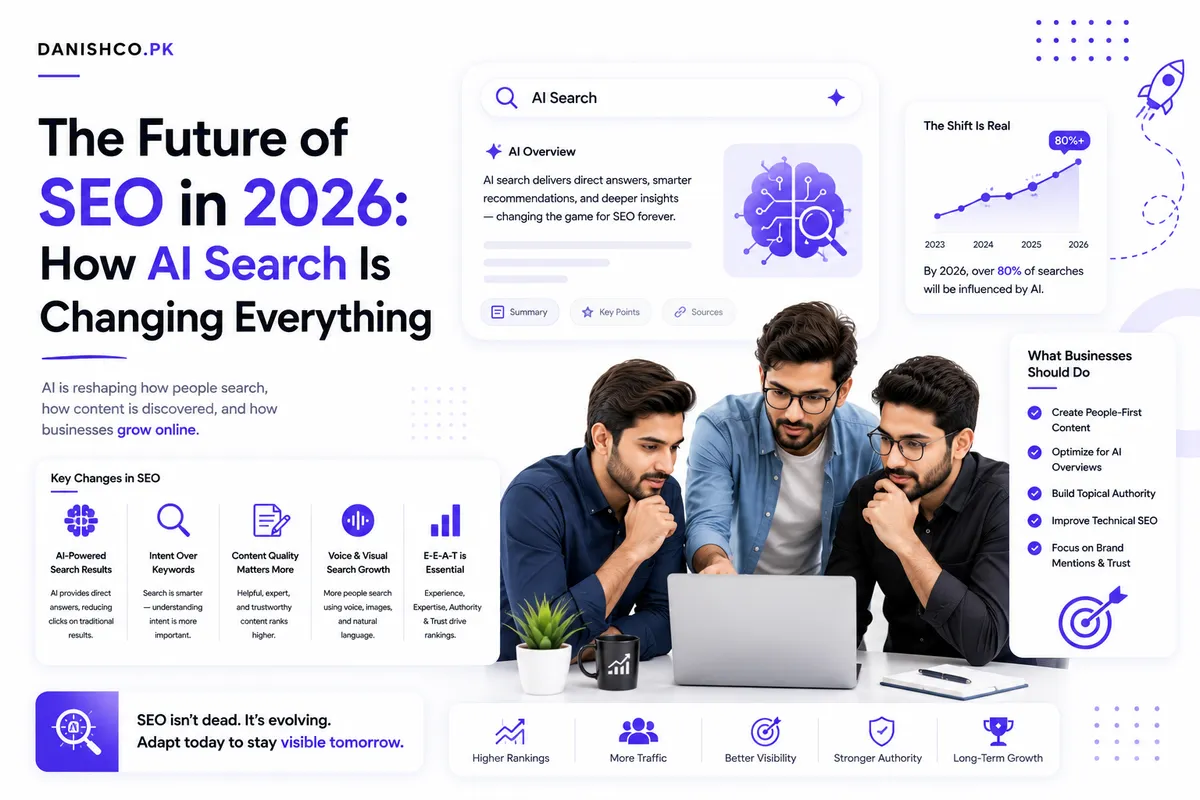 Marketing
Search is evolving faster than ever. Discover how AI Search, Google AI Overviews, ChatGPT and conversational search are transforming SEO in 2026—and what businesses must do to stay visible.
 Marketing
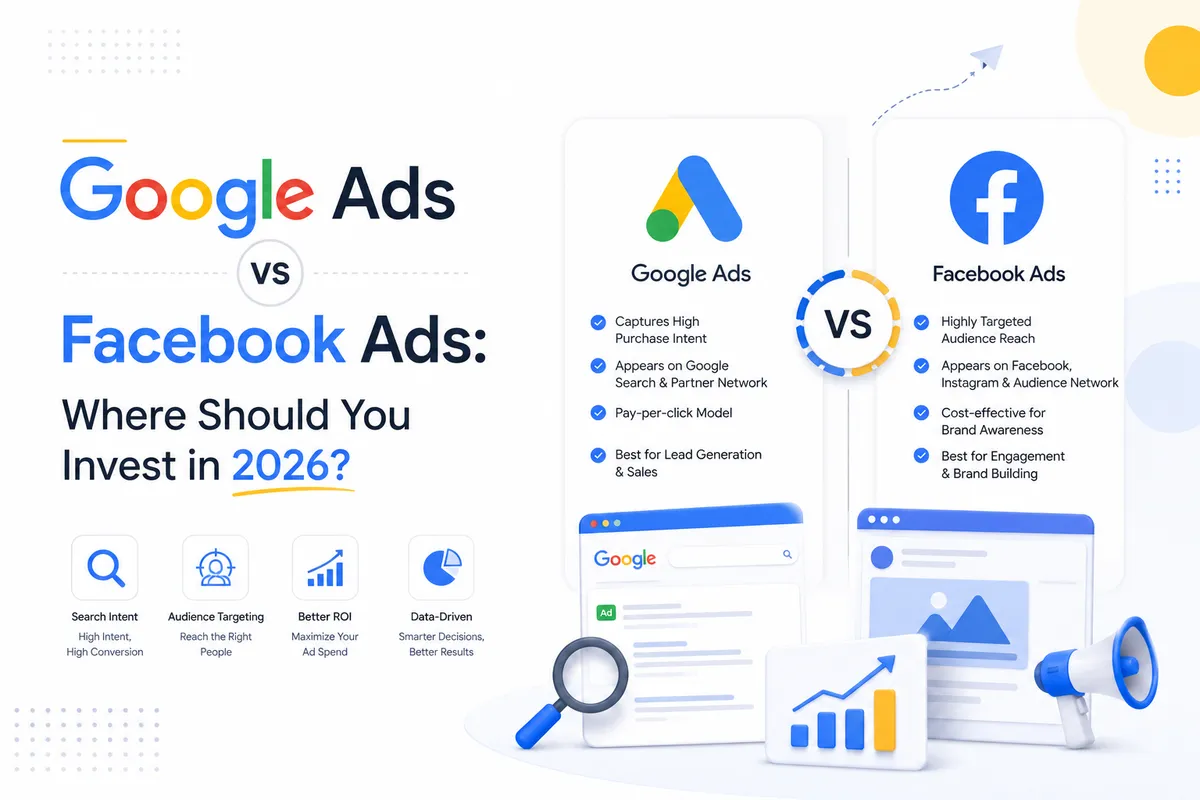
Not sure where to spend your advertising budget? Compare Google Ads and Facebook Ads to choose the right platform for your business.