
Loading...
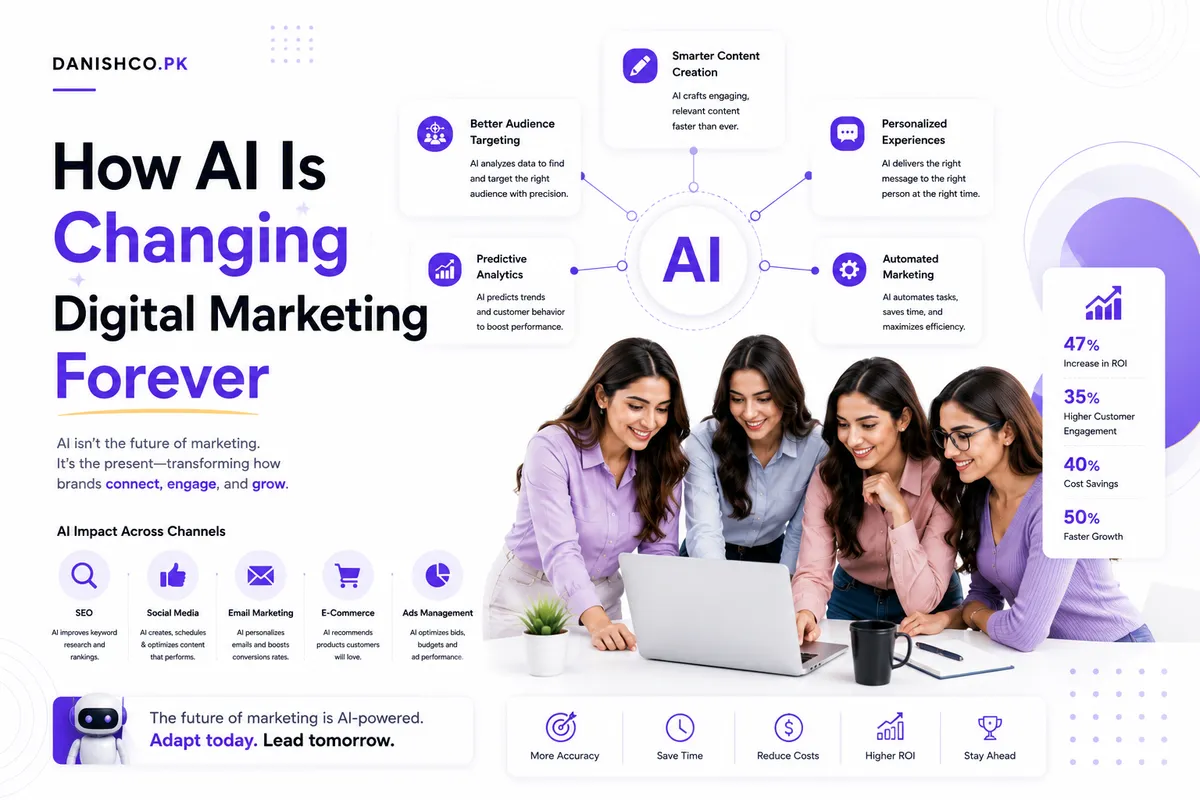
Artificial Intelligence is transforming SEO, advertising, content creation and customer engagement. Learn how businesses can use AI to grow faster.
Understanding the core problem that needed to be solved
Artificial intelligence is not coming to digital marketing. It is already here, and it is fundamentally reshaping every aspect of how businesses reach, engage, and convert customers. The speed and scale of this transformation are unprecedented, and businesses that fail to adapt risk becoming irrelevant as AI-powered competitors capture increasing market share.
Understanding the full scope of AI's impact on marketing is essential for any business owner who wants to remain competitive in the coming years. The first and most visible area of transformation is search. AI has fundamentally changed how search engines work and how users find information.
Google's AI Overviews now generate direct answers to search queries at the top of search results, reducing the need for users to click through to websites. ChatGPT and other AI chatbots have become alternative search tools where users ask questions and receive comprehensive answers without visiting any website at all. This shift threatens the traditional SEO model where businesses optimized content to rank in search results and drive traffic to their websites.
If users get answers directly from AI without clicking through, the entire traffic-based marketing model is disrupted. Businesses must now optimize not just for traditional search rankings but for AI-generated answers and chatbot responses. The second transformation is in advertising.
AI-powered advertising platforms can now optimize campaigns in real time, making decisions about targeting, bidding, creative selection, and budget allocation far faster and more effectively than human managers. Google Ads uses AI for automated bidding strategies that adjust bids based on the likelihood of conversion for each individual auction. Facebook Ads uses AI to find the most responsive audiences and optimize ad delivery for specific objectives.
These AI systems process vast amounts of data and make millions of decisions per second, producing results that human managers cannot match through manual optimization. The challenge for businesses is that AI-powered advertising requires a different approach to campaign management. Humans must shift from tactical optimization to strategic direction, providing the AI with clear objectives, quality data, and appropriate constraints while trusting the AI to handle the granular optimization.
Best Practice
The third transformation is in content creation. Generative AI tools can now produce written content, images, video, audio, and even code at a speed and volume that was impossible just a few years ago. This capability creates both opportunities and challenges.
On one hand, businesses can produce more content faster and at lower cost, potentially increasing their content marketing output dramatically. On the other hand, the ease of AI content creation has led to an explosion of low-quality, generic content that floods search results and social media feeds. Businesses face the challenge of using AI to increase content production while maintaining the quality, originality, and brand voice that differentiates their content from the mass of AI-generated noise.
There is also the ongoing question of how search engines will treat AI-generated content and whether they will penalize sites that rely too heavily on AI content creation. The fourth transformation is in customer service and engagement. AI-powered chatbots and virtual assistants now handle a significant portion of customer service interactions, providing instant responses to common questions, processing orders, and resolving issues without human involvement.
These AI systems have become sophisticated enough to handle complex conversations and can personalize interactions based on customer data and history. The challenge for businesses is implementing AI customer service without sacrificing the human touch that customers value for complex or sensitive issues. Finding the right balance between AI efficiency and human empathy is critical.
The fifth challenge is job displacement fears within marketing teams. As AI takes over tasks previously performed by humans, marketing professionals worry about their roles becoming obsolete. Content writers worry that AI will replace their writing.
SEO specialists worry that AI Overviews will eliminate the need for search optimization. Advertising managers worry that AI will automate campaign management. These fears are not entirely unfounded, but the reality is more nuanced.
Best Practice
AI will eliminate some marketing jobs, particularly those focused on routine, repetitive tasks, but it will also create new roles focused on AI strategy, AI system management, and human-AI collaboration. Businesses must navigate this transition thoughtfully, retraining and upskilling their marketing teams rather than simply replacing them. The sixth challenge is data privacy concerns with AI marketing systems.
AI-powered marketing requires vast amounts of customer data to train models and deliver personalized experiences. As privacy regulations tighten and consumers become more protective of their data, businesses face the challenge of collecting sufficient data for AI systems while respecting privacy preferences and complying with regulations. The use of customer data for AI training raises ethical questions about consent, transparency, and data security that businesses must address proactively.
A seventh challenge that is emerging rapidly is the question of AI-generated content originality and search engine penalties. As Google and other search platforms develop more sophisticated methods for detecting AI-generated content, businesses that rely heavily on AI content creation risk being penalized in search rankings. The balance between efficient AI content production and the need for original, human-quality content that search engines reward is becoming one of the most important strategic considerations for content marketers in 2026.
An eighth challenge is the increasing cost and complexity of AI marketing tools. As AI becomes more integrated into marketing, the number of available tools, platforms, and solutions has exploded. Businesses face the challenge of selecting the right tools, integrating them into their existing stack, training their teams to use them effectively, and managing the cost of multiple AI subscriptions.
Without a clear AI tool strategy, businesses risk wasting money on redundant or incompatible solutions and failing to realize the promised benefits of AI adoption. A ninth challenge that businesses will increasingly face is the ethical consideration of AI-generated marketing content and its impact on brand trust. Consumers are becoming more aware of AI-generated content and are developing opinions about whether they trust content created by AI versus content created by humans.
Key Takeaway
Some consumers actively prefer human-created content and may view AI-generated marketing as impersonal or deceptive, especially if it is not disclosed. Businesses must navigate this emerging consumer preference landscape carefully, deciding when to use AI, when to disclose its use, and how to maintain trust with audiences who may be skeptical of AI-generated marketing materials. A tenth challenge is preparing for the next wave of AI capabilities that are already on the horizon.
Advances in multimodal AI, agentic AI that can take autonomous actions, and real-time personalization engines will create even more disruption in the coming years. Businesses that only address today AI challenges without building the organizational capacity to adapt to future AI developments will find themselves perpetually behind the curve, constantly scrambling to catch up rather than leading in their markets.
The strategic approach we developed and implemented
Navigating the AI transformation of digital marketing requires a structured implementation framework that helps businesses adopt AI strategically while maintaining the human elements that make marketing truly effective. The goal is not to replace your marketing team with AI but to augment their capabilities, freeing them to focus on higher-value strategic activities while AI handles routine tasks and provides data-driven insights. The first step is developing a practical AI implementation framework for your marketing team.
Start by auditing your current marketing activities and identifying which tasks are most suitable for AI automation. Tasks that are repetitive, data-intensive, rule-based, or require processing large volumes of information are the best candidates for AI implementation. Tasks that require creativity, emotional intelligence, strategic judgment, or deep understanding of human nuance should remain primarily human-led with AI support.
Create a phased implementation plan that prioritizes quick wins with low-risk AI applications before moving to more complex implementations. The second step is selecting AI tools for each marketing function. For SEO, use AI tools that analyze search patterns, identify content gaps, optimize for AI Overviews, and generate structured data markup.
For advertising, use platform-native AI bidding and targeting tools along with third-party AI optimization platforms. For content creation, use generative AI tools for drafting, brainstorming, and content variations while maintaining human oversight for quality, accuracy, and brand voice consistency. For email marketing, use AI personalization tools that optimize send times, subject lines, and content based on individual recipient behavior.
For analytics, use AI-powered platforms that surface insights, predict trends, and recommend actions based on marketing data. The third step is establishing a human-AI collaboration model. Define clear roles and responsibilities for humans and AI in your marketing workflow.
AI should handle the first draft of content, the initial analysis of data, the routine optimization of campaigns, and the automation of repetitive tasks. Humans should provide strategic direction, review and refine AI outputs, make final decisions on creative and strategic matters, and handle customer interactions that require empathy and judgment. Establish review processes and quality standards for AI-generated content.
Pro Tip
Train your team to work effectively with AI tools, understanding both their capabilities and limitations. The fourth step is maintaining brand authenticity in an AI-powered marketing environment. As AI generates more of your marketing content and interactions, there is a real risk that your brand voice becomes generic and indistinct.
Combat this by developing detailed brand guidelines that AI tools can follow. Create a brand voice document that specifies vocabulary, tone, sentence structure preferences, and topics to avoid. Use custom AI model training to align AI outputs with your specific brand voice.
Review AI-generated content for brand consistency before publication. Ensure that customer-facing AI interactions clearly identify themselves as AI when appropriate and provide easy paths to human assistance. The fifth step is implementing a measurement framework for AI marketing ROI.
Track not just the direct cost savings from AI automation but also the improvements in marketing performance that AI enables. Measure changes in content production volume, content quality scores, search rankings, advertising efficiency, conversion rates, and customer satisfaction before and after AI implementation. Calculate the total cost of AI tools, implementation, and training against the combined value of cost savings and performance improvements.
Use these measurements to make data-driven decisions about which AI applications to expand and which to modify or discontinue. The sixth step is addressing privacy and ethics proactively. Implement data governance policies that specify what customer data can be used for AI training, how it must be protected, and how customers are informed about AI use.
Ensure compliance with relevant privacy regulations in all markets where you operate. Be transparent with customers about your use of AI in marketing and customer service. Give customers control over their data and their AI interaction preferences.
Build ethical guidelines for AI use that reflect your brand values and customer expectations. The seventh step is developing a content originality strategy that balances AI efficiency with the need for unique, high-quality content that search engines reward. Use AI for research, outlining, drafting, and optimization while ensuring that final content includes substantial human input, original insights, expert perspectives, and unique data or case studies that cannot be generated by AI alone.
Key Takeaway
Establish clear guidelines for when and how AI can be used in content creation and implement review processes that verify content originality and value before publication. The eighth step is investing in team education and development. As AI transforms marketing roles, invest in training programs that help your team develop the skills they will need in an AI-augmented marketing environment.
These include AI tool proficiency, data analysis and interpretation, strategic thinking, creative direction, and emotional intelligence. Help your team understand that AI is a tool that enhances their capabilities rather than a threat to their employment. Create opportunities for team members to experiment with AI tools and develop expertise in human-AI collaboration.
The businesses that will thrive in the AI era are not those that replace humans with AI but those that create the most effective partnerships between human creativity and AI capability, leveraging the strengths of both to achieve results that neither could achieve alone. A ninth step is developing an AI ethics and disclosure framework that maintains customer trust. Create clear policies about when and how AI is used in marketing content creation, customer interactions, and data analysis.
Disclose AI use in customer-facing contexts where it is relevant and material to the customer understanding of the interaction. Establish ethical guidelines that prevent AI from being used in ways that could mislead, manipulate, or deceive customers. Regularly review AI applications against these ethical guidelines and adjust as technology and consumer expectations evolve.
Being transparent about AI use while demonstrating responsible AI practices can actually enhance brand trust by positioning your business as thoughtful and ethical in its technology adoption. The tenth step is building organizational capacity for continuous AI adaptation. Create a cross-functional AI committee that monitors developments in AI technology and assesses their potential impact on your marketing.
Pro Tip
Establish a practice of regular AI experimentation where teams are encouraged to test new AI tools and approaches in low-risk environments before scaling them. Build partnerships with AI vendors, consultants, and research organizations that can provide early access to emerging technologies and expert guidance. Invest in AI literacy training across your marketing team so that every team member understands not just how to use current AI tools but how to evaluate and adapt to new AI capabilities as they emerge.
The businesses that will lead in the AI era are those that build not just technical AI capabilities but the organizational culture, ethics, and adaptability to continuously evolve alongside the technology.
Pro Tip
Measurable outcomes and business impact achieved
Implemented AI framework for marketing functions including SEO, ads, and content
Established human-AI collaboration model for content creation and optimization
Built measurement framework for tracking AI marketing ROI
Developed brand authenticity guidelines for AI-generated marketing content
Best Practice
Tools, platforms, and technologies powering the solution
Expert Recommendation
The most important lessons from this project
Key Takeaway
Common questions about our approach and methodology
The timeline depends on the scope of work. Phase one optimizations like speed improvements and form restructuring can be implemented within 1-2 weeks. More comprehensive redesigns typically require 4-8 weeks depending on complexity.
Not necessarily. Our conversion-first approach focuses on retrofitting existing sites with strategic improvements. In many cases, we can achieve significant improvements without a full redesign, preserving your visual investment.
We tie every optimization to specific, measurable business metrics. Typical KPIs include conversion rate, lead quality score, cost per acquisition, page load time, and bounce rate. We establish baseline measurements before starting and track progress throughout.
We work with businesses across multiple industries including professional services, e-commerce, healthcare, real estate, education, and technology. Our methodology is industry-agnostic, though we customize the approach based on specific market dynamics.
Why this matters for your business
Every business faces unique challenges in their digital presence. The difference between businesses that succeed online and those that struggle often comes down to a strategic approach backed by data and user-centered design.
Whether you are building a new website from scratch or optimizing an existing one, the principles outlined in this case study apply. Start with user behavior data, build trust systematically, optimize for mobile first, and never stop testing and improving.
Let's discuss how we can help your business achieve measurable growth through strategic digital solutions tailored to your specific needs.
Get Your Free Consultation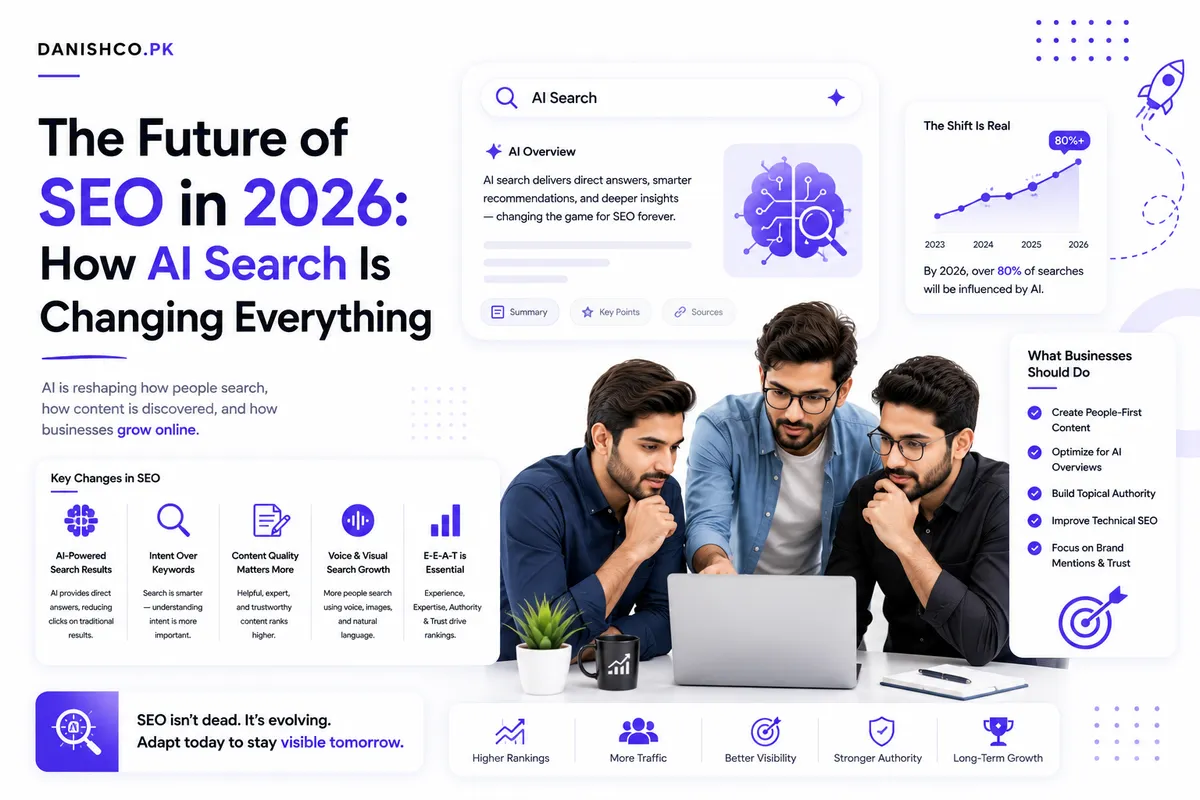 Marketing
Search is evolving faster than ever. Discover how AI Search, Google AI Overviews, ChatGPT and conversational search are transforming SEO in 2026—and what businesses must do to stay visible.
 Marketing
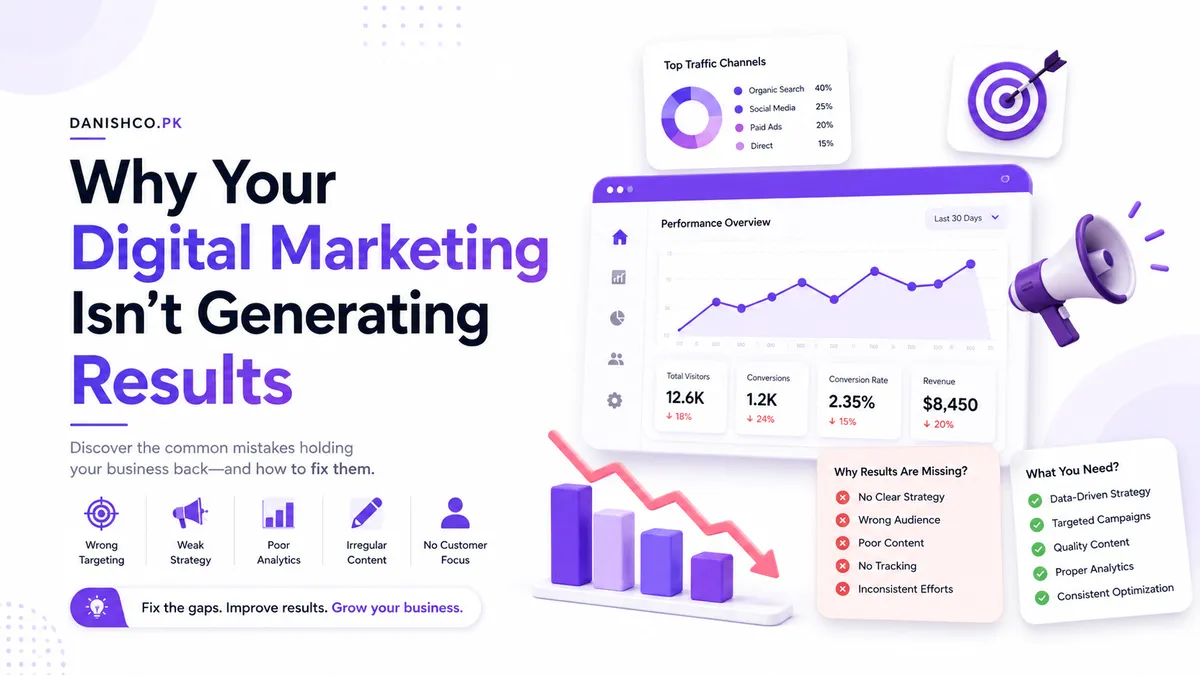
Spending money on marketing but getting little or no return? Discover the biggest reasons campaigns fail and how to fix them.