
Loading...
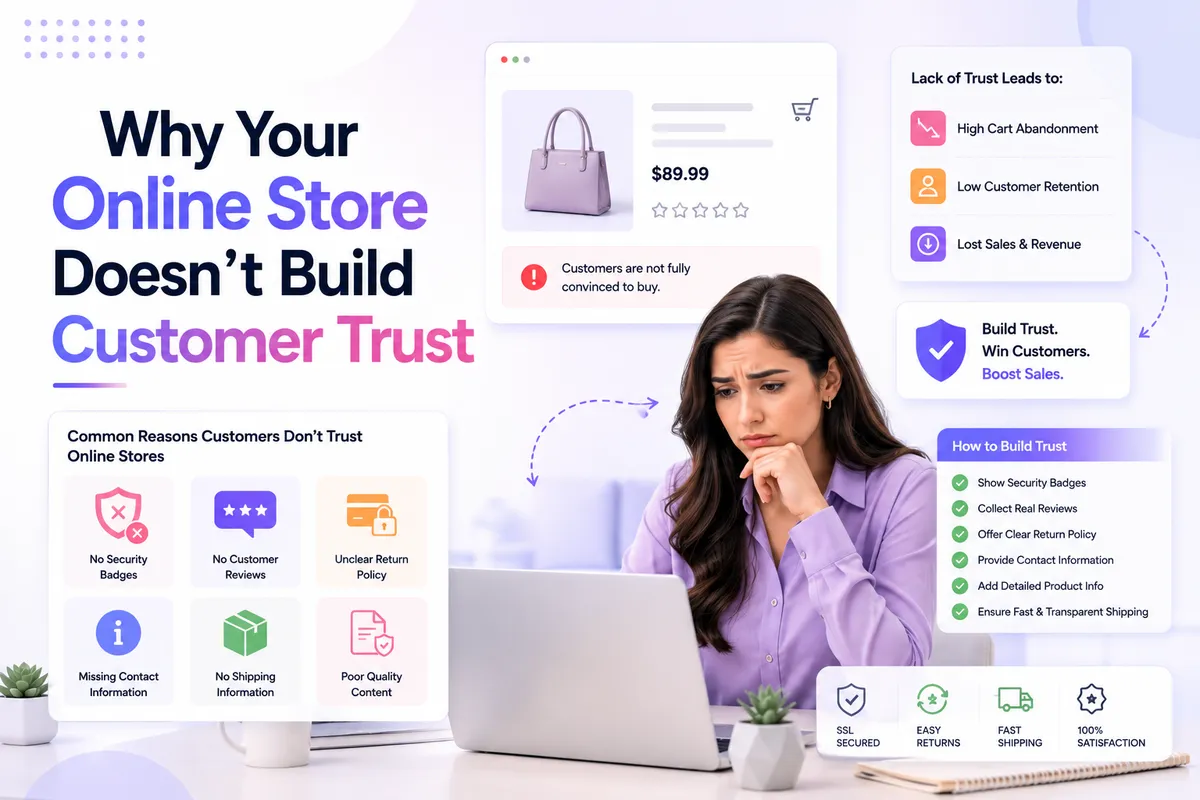
Customers buy from stores they trust. Learn the trust signals every ecommerce website needs to increase conversions and repeat purchases.
Understanding the core problem that needed to be solved
Trust is the currency of ecommerce. In a physical store, customers can see the products, interact with staff, and assess the environment before deciding to buy. Online, none of these trust-building elements exist.
Customers must decide whether to give their money and personal information to a website they may have discovered only minutes ago. For many ecommerce stores, this trust gap is never adequately bridged, and the result is lost sales, high bounce rates, and low conversion rates. The reasons why online stores fail to build trust are varied, but they follow consistent patterns.
The first reason is poor website design. A website that looks outdated, unprofessional, or poorly constructed signals to visitors that the business behind it may be equally unprofessional. Design quality is interpreted as a proxy for business quality, and a poorly designed website creates an immediate trust deficit that is difficult to overcome.
The second reason is absence of social proof. Humans look to others for guidance on what to do, especially in uncertain situations. An ecommerce store that does not display customer reviews, testimonials, case studies, or social media engagement leaves visitors without the social validation they need to feel comfortable making a purchase.
The third reason is missing contact information. A store that does not clearly display a phone number, email address, physical address, or live chat option feels anonymous and potentially untrustworthy. Customers want to know that there is a real person or business behind the website who can be reached if something goes wrong.
The fourth reason is no about page or company information. Customers want to know who they are buying from. A missing or minimal about page that does not tell the company story, introduce the team, or explain the mission leaves visitors without a sense of connection to the business.
Best Practice
The fifth reason is fake or no reviews. In an attempt to build trust quickly, some stores display fake reviews that customers can easily identify. The damage from fake reviews is far greater than having no reviews at all.
When customers suspect reviews are not genuine, they question everything about the store. Conversely, having no reviews at all raises questions about whether the store has ever made a sale. The sixth reason is missing security badges.
Without visible security indicators like SSL certificates, payment card industry compliance badges, or recognized security seals, customers have no way of knowing whether their payment information will be handled securely. The seventh reason is no clear return policy. Buying online always carries the risk that the product will not meet expectations.
A clear, customer-friendly return policy reduces this perceived risk significantly. When the return policy is hidden, confusing, or restrictive, the perceived risk of purchase increases. The eighth reason is poor product imagery.
Low-quality, limited, or unhelpful product images make it difficult for customers to evaluate what they are buying. In an online store, images are the primary way customers assess products, and inadequate imagery leaves too much to the imagination, increasing uncertainty. The ninth reason is slow website loading.
A slow website signals technical incompetence and carelessness. Customers interpret slow performance as an indicator of how the business handles other aspects of its operations, including order fulfillment and customer service. The tenth reason is no privacy policy.
Customers are increasingly concerned about how their data is collected, stored, and used. A missing or hard-to-find privacy policy raises concerns about data handling practices. The eleventh reason is unprofessional branding.
Inconsistent logo usage, mismatched fonts and colors, poor-quality graphics, and amateurish design across the site undermine the perception of professionalism and reliability. The twelfth reason is inconsistent messaging. When the value proposition, brand voice, or marketing messages are inconsistent across different pages or channels, customers receive mixed signals that make it difficult to trust what the business stands for.
Key Takeaway
These trust failures compound each other. A visitor who encounters poor design, no reviews, missing contact information, and slow loading is not experiencing four separate problems but one large credibility problem that makes purchase feel risky. The cumulative effect is that visitors browse but do not buy, or they leave and buy from a competitor who has invested in building trust.
The financial impact of trust deficiencies in ecommerce is difficult to overstate. A store that fails to build trust does not just lose individual sales but suffers from a systemic conversion problem that affects every aspect of the business. Customer acquisition costs are higher because fewer visitors convert, meaning every dollar spent on marketing generates less return.
Average order values are lower because customers are hesitant to buy more from a store they do not fully trust. Repeat purchase rates are minimal because the first purchase experience, while it may have been completed, did not build enough confidence for the customer to return. The lifetime value of customers acquired through trust-deficient stores is a fraction of what it could be with proper trust signals in place.
The cost of building trust is relatively small compared to the cost of operating without it. Professional design, authentic reviews, clear policies, and responsive customer service are investments that pay for themselves many times over through improved conversion rates, higher average order values, and increased customer lifetime value. The businesses that invest in trust signals gain a compounding advantage over competitors who neglect this critical aspect of ecommerce.
Each trust-building element reinforces the others, creating a virtuous cycle where trust leads to sales, sales lead to reviews and social proof, and reviews attract more customers, further strengthening the store's credibility and market position.
The strategic approach we developed and implemented
Building trust in an ecommerce store requires a comprehensive approach that addresses every point of contact between the customer and your brand. Trust is not established by a single element but by the cumulative effect of many signals working together consistently. Here is how to build trust across every dimension of your online store.
The first and most foundational element is professional design. Invest in a high-quality, modern ecommerce theme that is responsive, fast-loading, and visually consistent. Use a clean layout with plenty of white space.
Ensure your branding is consistent across all pages with a professional logo, cohesive color palette, and typography that reflects your brand personality. Professional design signals that you take your business seriously and that you care about the customer experience. The second element is customer reviews and testimonials.
Implement a review platform that collects and displays authentic customer reviews on every product page. Show both positive and constructive reviews to demonstrate authenticity. Respond to negative reviews professionally and offer solutions.
Feature outstanding testimonials prominently on your homepage and key landing pages. Display aggregate ratings and review counts to provide social proof at a glance. The third element is trust badges and certifications.
Display security badges from recognized providers like Norton, McAfee, or SSL. com near payment fields and throughout the checkout process. Show payment method logos to indicate the range of options available.
Display certifications from industry associations, Better Business Bureau accreditation, or any relevant professional memberships. These badges provide third-party validation that your store meets certain standards. The fourth element is clear and accessible contact information.
Display your phone number, email address, and physical address prominently on your website, ideally in the header or footer of every page. Implement a live chat option for immediate customer support. Make it easy for customers to reach a real person if they have questions or concerns.
Best Practice
A visible contact presence signals that you are an accessible and accountable business. The fifth element is transparent policies. Make your return policy, shipping policy, and privacy policy easy to find and written in clear, customer-friendly language.
Summarize key points on product pages and at checkout. A generous return policy is particularly powerful for building trust because it reduces the perceived risk of purchase. The sixth element is high-quality product imagery.
Invest in professional product photography that shows products from multiple angles, includes lifestyle shots showing products in use, and provides zoom functionality for detailed inspection. Include size references, scale indicators, and any relevant detail shots. Video demonstrations can be even more effective than still images for building confidence in product quality and functionality.
The seventh element is fast and secure checkout. Optimize your checkout process for speed and security. Display security badges throughout the checkout process.
Use a secure payment gateway. Show a progress indicator. Offer guest checkout.
The checkout experience should feel safe, smooth, and professional. The eighth element is social media presence. Maintain active social media profiles on platforms relevant to your audience.
Post regularly, engage with followers, and share customer content. Link to your social profiles from your website. An active social media presence provides additional social proof and gives customers another way to evaluate your credibility.
The ninth element is content marketing. Publish helpful, informative content that demonstrates your expertise in your industry. Blog posts, buying guides, how-to articles, and video tutorials all contribute to establishing your store as a knowledgeable and trustworthy resource rather than just a place to spend money.
The tenth element is a compelling about page. Tell your story. Introduce your team.
Share your mission and values. Explain why you started the business and what makes you different. An authentic about page creates a human connection that transactional pages cannot provide.
Pro Tip
The eleventh element is case studies and customer success stories. Showcase detailed examples of how your products have helped real customers solve real problems. Include specific results, quotes, and before-and-after evidence when applicable.
Case studies provide powerful evidence that your products deliver on their promises. The twelfth element is guarantees. Offer strong guarantees that reduce customer risk: money-back guarantees, satisfaction guarantees, price match guarantees, or quality guarantees.
A strong guarantee signals confidence in your products and reduces the primary barrier to purchase. The thirteenth element is excellent customer service. Respond to inquiries promptly and professionally.
Resolve issues quickly and generously. Go above and beyond customer expectations. Customer service interactions are powerful trust-building moments because they provide direct evidence of how you treat your customers.
Build these thirteen trust elements into your ecommerce store systematically. Trust is not built overnight but through consistent demonstration of reliability, transparency, and customer focus across every interaction. Each positive interaction builds on previous ones, and over time, the cumulative effect creates a store that customers feel confident buying from and returning to.
Building trust also requires consistency across every channel and touchpoint where customers interact with your brand. Your website, social media profiles, email communications, advertising, packaging, and customer service should all present a consistent brand experience that reinforces the same trust signals. Inconsistency creates confusion and undermines trust because customers receive mixed signals about who you are and what you stand for.
Ensure your branding, messaging, and customer experience are aligned across all channels. Invest in customer service training that empowers your team to resolve issues quickly and generously. Customer service interactions are powerful trust-building opportunities because they provide direct evidence of how you treat your customers when things go wrong.
A customer who has a problem resolved quickly and satisfactorily often becomes more loyal than a customer who never had a problem at all. Monitor your online reputation across review platforms, social media, and forums. Respond to both positive and negative feedback professionally and promptly.
Best Practice
Address negative feedback constructively by acknowledging the issue, apologizing sincerely, and offering a solution. Potential customers who see you handling negative feedback well may actually trust you more because they see evidence of your commitment to customer satisfaction. Trust is built through thousands of small interactions consistently demonstrating reliability, transparency, and customer focus.
Every interaction is an opportunity to strengthen or weaken trust, and the most successful ecommerce brands are those that have designed their entire customer experience around building and maintaining trust at every touchpoint. The ecommerce brands that earn the highest levels of customer trust are those that consistently deliver on their promises, communicate transparently, handle problems gracefully, and demonstrate through every interaction that they value their customers as long-term relationships rather than single transactions. Trust is the foundation upon which successful ecommerce businesses are built, and investing in trust signals is one of the highest-return investments an online store can make.
Pro Tip
Measurable outcomes and business impact achieved
Built comprehensive trust signals for ecommerce store
Increased conversion rates through trust optimization
Reduced purchase hesitation with social proof
Established brand credibility and customer confidence
Best Practice
Tools, platforms, and technologies powering the solution
Expert Recommendation
The most important lessons from this project
Key Takeaway
Common questions about our approach and methodology
The timeline depends on the scope of work. Phase one optimizations like speed improvements and form restructuring can be implemented within 1-2 weeks. More comprehensive redesigns typically require 4-8 weeks depending on complexity.
Not necessarily. Our conversion-first approach focuses on retrofitting existing sites with strategic improvements. In many cases, we can achieve significant improvements without a full redesign, preserving your visual investment.
We tie every optimization to specific, measurable business metrics. Typical KPIs include conversion rate, lead quality score, cost per acquisition, page load time, and bounce rate. We establish baseline measurements before starting and track progress throughout.
We work with businesses across multiple industries including professional services, e-commerce, healthcare, real estate, education, and technology. Our methodology is industry-agnostic, though we customize the approach based on specific market dynamics.
Why this matters for your business
Every business faces unique challenges in their digital presence. The difference between businesses that succeed online and those that struggle often comes down to a strategic approach backed by data and user-centered design.
Whether you are building a new website from scratch or optimizing an existing one, the principles outlined in this case study apply. Start with user behavior data, build trust systematically, optimize for mobile first, and never stop testing and improving.
Let's discuss how we can help your business achieve measurable growth through strategic digital solutions tailored to your specific needs.
Get Your Free Consultation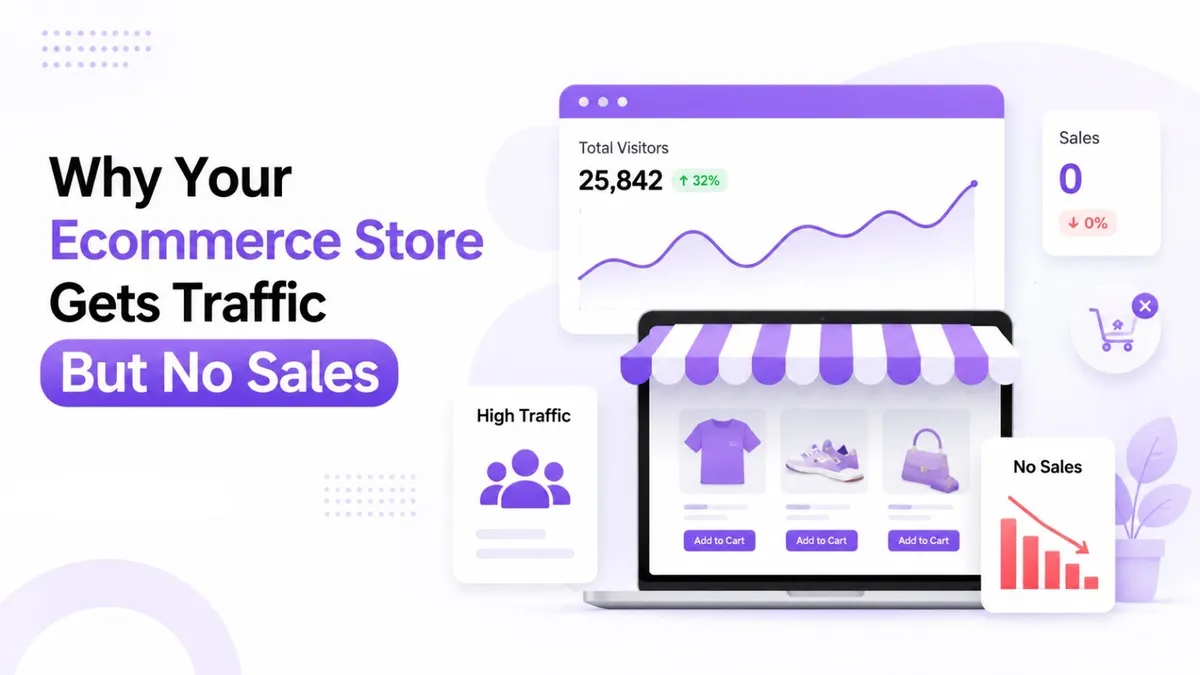 Ecommerce
Getting traffic but no orders? Learn the most common reasons ecommerce stores fail to convert visitors into paying customers.
 Ecommerce
Small mistakes can have a huge impact on your online sales. Learn the top ecommerce conversion killers and how to fix them.