
Loading...

Trust is the foundation of every successful business. Discover why customers hesitate to trust your brand and learn practical strategies to build credibility.
Understanding the core problem that needed to be solved
Trust is the single most valuable asset a brand can possess, yet it is also the most fragile and the hardest to rebuild once lost. In an era where consumers are bombarded with choices and have access to instant reviews, social proof, and competitor comparisons, the absence of trust is a dealbreaker that no amount of visual design or marketing spend can overcome. Businesses that fail to establish trust systematically and visibly will find themselves losing customers to competitors who may offer inferior products but superior brand confidence.
The problem begins with inconsistency. A brand that presents itself differently across channels, with mismatched messaging on its website, social media, and advertising, signals unreliability. When a visitor sees a polished website but then encounters an outdated social media profile or inconsistent pricing information, the subconscious reaction is doubt.
If the brand cannot present itself consistently, the prospect reasons, how can it deliver consistently. This inconsistency erodes trust before any meaningful engagement occurs. The second dimension is the absence of third-party validation.
In the modern purchase journey, consumers rarely take a brand word for its own claims. They seek evidence from independent sources: reviews, testimonials, case studies, media features, industry certifications. A brand that fails to surface this evidence at critical decision points is asking prospects to trust based on self-proclaimed expertise alone, a request that increasingly sophisticated buyers will decline.
The third factor is transparency deficit. Consumers today expect to know who is behind a brand, what it stands for, and how it operates. Brands that hide behind generic imagery, vague about pages, and anonymous contact forms create suspicion.
The absence of real people, real stories, and real accountability signals that the brand has something to hide. The fourth factor is the overpromise problem. Brands that claim to be the best, the fastest, or the most affordable without evidence trigger skepticism rather than admiration.
Best Practice
Grand claims without substantiation are interpreted as exaggeration at best and dishonesty at worst. The gap between what a brand promises and what it can prove creates trust friction that prevents conversion. The fifth factor is poor digital experience.
A website that loads slowly, displays poorly on mobile, has broken links, or looks outdated communicates neglect. If the brand does not care enough to maintain its primary digital presence, the visitor assumes the same level of carelessness will extend to products and services. The experience itself becomes evidence of the brand character, and a poor experience is negative evidence that is difficult to overcome with positive messaging.
These five factors mean that trust is not something a brand can claim. It must be demonstrated through every interaction, every piece of content, and every touchpoint in the customer journey. Building trust requires a systematic approach that addresses each factor with specific, measurable strategies.
Research from the Edelman Trust Barometer consistently demonstrates that trust is the primary factor in purchasing decisions for the majority of consumers globally, yet most businesses allocate less than five percent of their marketing budget to trust-building activities. The asymmetry is striking: companies invest heavily in attracting attention through advertising and promotions, but they neglect the trust infrastructure that determines whether that attention converts into revenue. Consider the financial impact of a single percentage point improvement in customer trust.
For a business generating PKR 10 million in annual revenue, each percentage point of trust improvement can translate into hundreds of thousands of rupees in additional revenue through higher conversion rates, increased average order values, and improved customer retention. Over a five-year period, the compounding effect of sustained trust-building can double or triple customer lifetime value. The data from industries that have measured trust quantitatively shows that high-trust brands enjoy premium pricing power of fifteen to twenty-five percent over low-trust competitors in the same category.
Key Takeaway
Customers pay more not for better products but for the confidence that the brand will deliver as promised. This trust premium represents pure profit margin, yet it remains invisible to businesses that have not invested in measuring or building it. Trust also affects customer acquisition cost indirectly through referral economics.
A trusted brand generates more word-of-mouth referrals, reducing the cost of acquiring each new customer. Research indicates that referred customers have a sixteen to twenty-five percent higher lifetime value than non-referred customers, and they are acquired at a fraction of the cost of advertising-driven customers. When trust is absent, the business must spend more to acquire each customer, further compressing margins in an already competitive environment.
The asymmetry of trust-building also manifests in recovery economics. When a high-trust brand makes a mistake, customers are more likely to give it a second chance. The same mistake by a low-trust brand results in permanent customer loss.
This means that trust serves as an insurance policy against operational failures, and the absence of trust makes every mistake disproportionately costly. The behavioral economics of trust reveals a fascinating asymmetry: trust is built slowly through repeated positive interactions but destroyed instantly by a single negative one. This asymmetry means that businesses cannot afford even isolated failures in trust-building, because the cumulative cost of rebuilding destroyed trust far exceeds the cost of maintaining it.
Research in consumer psychology demonstrates that it takes an average of five to seven positive brand interactions to offset the damage of a single negative interaction. For a business that experiences even occasional trust failures, the cost of rebuilding goodwill can consume marketing budgets that would otherwise drive growth. The practical implication is that trust-building must be treated as a continuous operational priority rather than a one-time marketing initiative.
Brands that consistently invest in trust infrastructure develop a compounding advantage over time, because each positive interaction builds on previous ones, creating a growing reservoir of customer confidence that insulates the business from competitive threats and market disruptions. The five trust barriers identified in this analysis represent the most common and damaging obstacles that brands face in building customer confidence, but they are not exhaustive. Each industry and market context introduces unique trust challenges that must be identified and addressed specifically.
A financial services brand, for example, faces different trust barriers than a healthcare provider or a retail business. The principles of trust architecture remain consistent, but their application must be tailored to the specific trust expectations and decision criteria of the target audience.
The strategic approach we developed and implemented
The solution is a comprehensive trust architecture framework that systematically addresses each of the five trust barriers through targeted interventions. The framework is organized into five pillars, each with specific tactics that can be implemented independently but work best together. Pillar one is brand consistency engineering.
We conduct a full audit of every customer touchpoint where the brand appears: website, social media profiles, email communications, advertising, packaging, physical locations, and customer service interactions. Each touchpoint is evaluated against brand guidelines for visual consistency, messaging alignment, and tone of voice. Inconsistencies are documented and prioritized for resolution.
The goal is that a customer who encounters the brand on any channel receives a unified experience that reinforces rather than undermines trust. This includes standardized logo usage, color palette application, typography, imagery style, and messaging framework across all channels. Pillar two is social proof activation.
Rather than passively collecting testimonials and hoping customers find them, we design a strategic social proof system that surfaces the right evidence at the right moment in the customer journey. Third-party validation is integrated at every decision point: testimonial excerpts appear after key benefit statements, case study summaries precede conversion forms, client logos are displayed prominently, media features and awards are highlighted, and user statistics such as customers served or projects completed are presented as credibility signals. Each piece of social proof is selected to address a specific trust barrier that prospects face at that stage of evaluation.
Pillar three is transparency infrastructure. We redesign the about page, team page, and contact sections to communicate authenticity through real people, real stories, and real accountability. Team member profiles with photographs, backgrounds, and direct contact information replace generic corporate descriptions.
Behind-the-scenes content showing processes, workspaces, and company culture humanizes the brand. Pricing transparency where possible reduces the anxiety of unknown costs. Clear policies on privacy, returns, and data handling provide legal reassurance.
Pro Tip
Pillar four is evidence-based messaging. Every significant claim made in marketing materials is supported by evidence: statistics from client results, third-party research citations, case study references, or demonstrable credentials. Grand claims are replaced with specific, provable statements.
Before-and-after comparisons, performance metrics, and client outcomes are presented as primary messaging rather than secondary support. The messaging shift is from we are the best to here is the evidence that our clients achieve specific results. Pillar five is experience quality assurance.
Website performance, mobile responsiveness, navigation usability, and content freshness are maintained to professional standards. Regular audits ensure that the digital experience reinforces rather than undermines brand trust. Page speed is optimized to under two seconds.
Mobile experience is tested on actual devices. Content is reviewed and updated on a regular schedule. Broken links and outdated information are addressed promptly.
The cumulative effect of these five pillars is a brand that communicates trustworthiness through every interaction, from the first impression to the post-purchase experience. The effectiveness of the trust architecture framework can be measured through several key metrics that track progress across each pillar. Brand consistency is measured through touchpoint audit scores, with the goal of achieving ninety-five percent or higher consistency across all customer-facing channels.
Social proof activation is tracked through testimonial collection rate, case study completion rate, and the integration of third-party validation at each stage of the customer journey. Transparency infrastructure is evaluated through about page completion scores, team profile coverage, and contact responsiveness metrics. The overpromise problem is addressed through messaging audit scores that measure the ratio of evidence-based claims to unsupported assertions.
The ultimate measure of the framework success, however, is the trust conversion rate: the percentage of prospects who move from initial engagement to active consideration based on trust signals encountered during evaluation. Businesses implementing this framework typically see measurable improvement in trust conversion rates within sixty to ninety days, with cumulative benefits accelerating over time as trust signals accumulate across customer touchpoints. The long-term objective is to create a self-reinforcing trust cycle where each new customer interaction generates additional social proof that further strengthens the trust architecture for future prospects.
Key Takeaway
The implementation of this framework follows a structured timeline that prioritizes quick wins while building toward comprehensive transformation. The first thirty days focus on diagnostic audit and quick fixes: brand consistency assessment, social proof inventory, messaging audit, and immediate trust signal improvements such as adding testimonials to high-traffic pages and updating the about page with team information. Days thirty through sixty focus on infrastructure building: creating brand guidelines, developing the social proof collection system, implementing transparency features across the website, and establishing the messaging review process.
Days sixty through ninety focus on optimization and measurement: refining trust signals based on engagement data, expanding social proof collection, and establishing ongoing monitoring systems. After the initial ninety-day implementation phase, the framework shifts to maintenance and continuous improvement mode with quarterly audits and ongoing optimization. The total investment in trust architecture typically ranges from PKR 150,000 to PKR 500,000 depending on business size and complexity, with most businesses recovering this investment through improved conversion rates within three to six months.
The return on investment extends beyond direct conversion improvement to include reduced customer acquisition costs through increased referrals, higher average order values from customers who trust the brand enough to purchase premium offerings, and improved customer retention rates that increase lifetime value. Businesses that have completed the full trust architecture framework report an average thirty to fifty percent improvement in prospect-to-customer conversion rates, a twenty to forty percent increase in customer referral rates, and a measurable improvement in customer retention and repeat purchase behavior. These compounding benefits make trust architecture one of the highest-return investments a business can make in its digital presence, with the value of increased customer confidence extending across every revenue stream and customer segment.
Pro Tip
Measurable outcomes and business impact achieved
Systematic trust architecture framework covering all five trust barriers
Social proof activation at every critical decision point
Transparency infrastructure revealing real people and real accountability
Evidence-based messaging replacing grand claims with provable results
Best Practice
Tools, platforms, and technologies powering the solution
Expert Recommendation
The most important lessons from this project
Key Takeaway
Common questions about our approach and methodology
The timeline depends on the scope of work. Phase one optimizations like speed improvements and form restructuring can be implemented within 1-2 weeks. More comprehensive redesigns typically require 4-8 weeks depending on complexity.
Not necessarily. Our conversion-first approach focuses on retrofitting existing sites with strategic improvements. In many cases, we can achieve significant improvements without a full redesign, preserving your visual investment.
We tie every optimization to specific, measurable business metrics. Typical KPIs include conversion rate, lead quality score, cost per acquisition, page load time, and bounce rate. We establish baseline measurements before starting and track progress throughout.
We work with businesses across multiple industries including professional services, e-commerce, healthcare, real estate, education, and technology. Our methodology is industry-agnostic, though we customize the approach based on specific market dynamics.
Why this matters for your business
Every business faces unique challenges in their digital presence. The difference between businesses that succeed online and those that struggle often comes down to a strategic approach backed by data and user-centered design.
Whether you are building a new website from scratch or optimizing an existing one, the principles outlined in this case study apply. Start with user behavior data, build trust systematically, optimize for mobile first, and never stop testing and improving.
Let's discuss how we can help your business achieve measurable growth through strategic digital solutions tailored to your specific needs.
Get Your Free Consultation Branding
Small branding mistakes can cost you customers. Learn the most common branding errors and how to create a professional business image.
 Branding
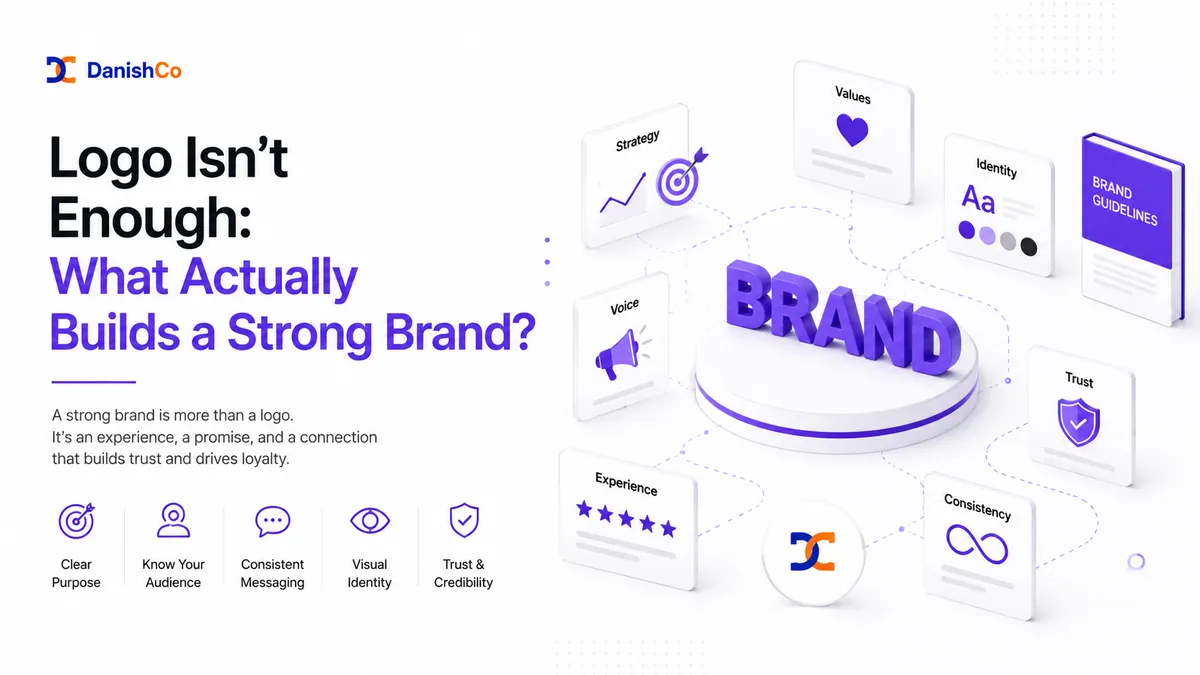
A logo is only one part of your brand. Discover the key elements that create a memorable and trusted business identity.